西游・降魔篇
全省首个!厦门发布外卖配送行业公约_我的网站

A | AI摘要 厦门发布全省首个外卖配送行业公约,聚焦算法优化、交通安全、食安保障与骑手权益,推动平台自律与行业共治,构建规范有序、温暖可持续的配送生态。
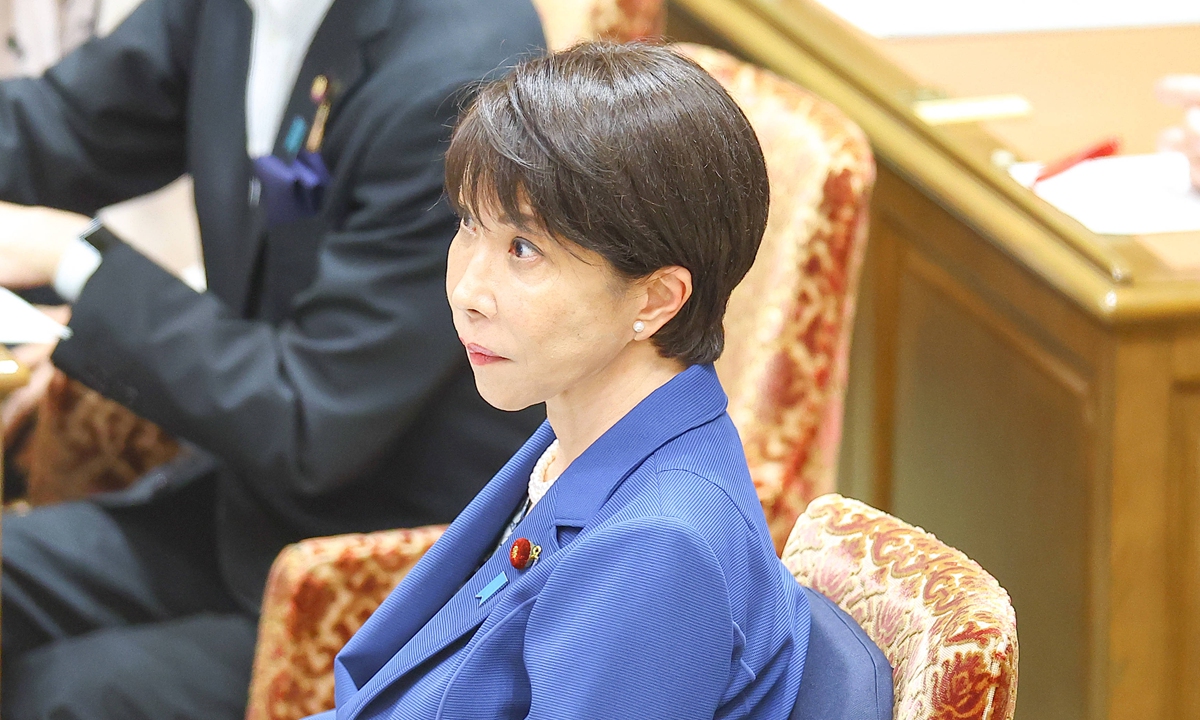
Due to concerns about fueling tension with China and South Korea, Japanese Prime Minister Sanae Takaichi is considering refraining from visiting the notorious Yasukuni Shrine, a symbol of Japanese militarism and wartime aggression, to mark the anniversary of Japan's unconditional surrender in World War II (WWII) on Saturday, Japanese media outlet Kyodo quoted sources familiar with the matter as saying on Wednesday.
Chinese experts said even if Takaichi forgoes a visit to the notorious shrine, the potential decision is merely driven by political calculations and diplomatic maneuvering, and could not be interpreted as a shift in her right-wing stance or as a sign of remorse over Japan's wartime aggression.
Such a visit to the shrine by Takaichi, a conservative known for her hawkish foreign policies, would certainly fuel tensions with China and create a rift in relations with South Korea, two countries that suffered under Japan's wartime military atrocities, Kyodo News reported.
Takaichi regularly visited the shrine before, even while serving as a Cabinet minister. But she has not visited the shrine since becoming leader of the ruling Liberal Democratic Party and prime minister in October, according to Kyodo news.
Chief Cabinet Secretary Minoru Kihara said at a press conference on August 7, when asked about a possible visit by Takaichi to the shrine around the anniversary, that "it is a matter for the prime minister to decide appropriately on her own," according to Japan's Jiji Press.
A source close to Takaichi told the Jiji that, "I don't think the prime minister will visit Yasukuni Shrine. It would complicate relations with South Korea."
Japan's Asahi TV reported that Takaichi may forgo the visit because she believes it is necessary to avoid triggering diplomatic tensions with South Korea, as well as with China.
A visit to the notorious shrine by a sitting Japanese prime minister would be a serious political incident, as it would reflect the leader's attitude toward Japan's wartime aggression and broader historical issues. Even if Takaichi chooses not to visit the shrine, it would not signal a retreat from her right-wing stance or a change in her views of Japan's wartime aggression against other countries, Lü Chao, an expert on Korean Peninsula issues at the Liaoning Academy of Social Sciences, told the Global Times. Rather, he said, the decision would largely reflect political calculations and diplomatic maneuvering.
Lü added that Takaichi could still make other symbolic gestures on the anniversary to cater to Japan's right-wing forces, whose support helped propel her to power. Such a move, he said, would underscore that her views of Japan's wartime history remain unchanged and serve as a reminder to neighboring Asian countries to remain vigilant about Japan's political direction.
Reporting on Takaichi's possible decision to forgo a visit to the shrine, South Korean newspaper Chosun Ilbo said on Wednesday that Takaichi had regularly visited the Yasukuni Shrine. "In the Liberal Democratic Party leadership election held in October last year, Takaichi also said that if appointed prime minister, she would visit the Yasukuni Shrine, noting that such visits should not become a diplomatic issue." However, since then, Takaichi has not visited in person and has only dedicated offerings in a private capacity, per the report.
In April, after Takaichi sent a ritual offering to the notorious Yasukuni Shrine, Chinese foreign ministry spokesperson Guo Jiakun said that China firmly opposes and strongly condemns Japan's latest negative moves related to Yasukuni Shrine and has lodged strong representations and protests with the Japanese side.
The Yasukuni Shrine is a spiritual tool and symbol of Japanese militarists responsible for the war of aggression. It is in fact a shrine for war criminals, noted Guo.
No sitting prime minister has gone to Yasukuni since Japan's late leader Shinzo Abe did so in 2013, drawing strong criticism from neighboring Asian countries.
Beyond Takaichi herself, some Japanese politicians and lawmakers have kept visiting the Yasukuni Shrine, triggering fierce pushback from peace advocates in Japan and the international community, Liu Jiangyong, a professor at the Institute of International Studies of Tsinghua University, told the Global Times, noting that such visits not only reflect the long-standing right-wing stance of Takaichi and other conservative politicians on historical issues, but also lay bare Japan's enduring militarist remnants.
Also in April, members of the conservative solidarity association, a group of conservatives in Japan's Liberal Democratic Party, and 166 Sanseito lawmakers from the Diet and local assemblies visited the Yasukuni war shrine.
In response, Lin Jian, Chinese foreign ministry spokesperson said that China strongly deplores and condemns such acts.
"By visiting the Yasukuni war shrine that honors Japanese Class-A war criminals year after year, these Japanese politicians seek to reverse the just verdict on Japanese aggression, and hereby whitewash Japan's war crimes and revive militarism. The Chinese people and people elsewhere who suffered under Japanese aggression will never accept that, neither will anyone in the world who stand for peace. As Japanese neo-militarism keeps gaining strength, the international community must stay on high alert and stand ready to stamp it out before it could wreak havoc in the region," said Lin.
。

B | 近日,在市市场监管局、市人社局、市公安局交警支队联合指导下,中共厦门市市场监管局“小个专”及网约配送员群体委员会发布全省首个外卖配送行业公约——《厦门市外卖配送行业公约》。美团外卖、淘宝闪购、京东外卖三大平台现场签约,各平台配送合作商同步作出自律承诺,标志着我市外卖配送行业正式从“政府单向监管”迈向“行业共治自治”新模式。 此次发布的行业公约聚焦算法压力、交通安全、食品安全、行业竞争、骑手权益五大民生痛点,以自律规范补齐治理短板,旨在实现为骑手减负、为食安加锁、为道路减压,推动全市外卖行业规范有序、健康高质量发展。 行业公约突出党建引领行业治理,要求强化网约配送行业党组织建设,引导骑手党员亮身份、亮职责、亮承诺,发挥先锋模范作用。同时,压实平台和配送企业主体责任,明令禁止恶意抢单、相互抹黑、不正当竞争等行为,引导企业守法诚信经营,营造公平有序的市场环境。 针对社会广泛关注的算法焦虑问题,行业公约明确摒弃“最严算法”,推行科学适度的考核机制。要求平台合理设定订单量、配送时限、准时率等考核指标,结合天气、路况等客观情况弹性放宽配送限制,建立健全申诉补时机制。同时优化派单与路线规划,严控订单饱和度,完善薪酬分配制度,保障专职骑手合法收入,让骑手配送更从容。 安全治理方面,行业公约致力于构建“交通+食安”双重防护体系。

C | 交通安全上,落实骑手岗前必训、每月轮训制度,从严整治闯红灯、逆行、不佩戴安全头盔、违法改装车辆等行为,建立交通违法教育惩戒、停单整改闭环机制,通过专属管理系统及时反馈整改情况,减少道路安全隐患。食品安全上,压实配送环节主体责任,统一送餐服务标准,常态化开展食安培训,严防配送过程食品污染。 在骑手权益保障上,行业公约细化暖心举措,健全多层次保障体系。

D | 督促企业为劳动关系骑手依法缴纳社保,扩大灵活就业骑手职业伤害保障覆盖面,探索多元商业保险方案。同时,持续优化从业环境,推进骑手驿站、智能取餐柜建设,支持组建行业工会,畅通骑手诉求渠道,常态化开展帮扶关爱。(厦门日报记者 陈泥 通讯员 卢腾)。
Current article:http://fligyl.chengjuecannaobianmouqueduoyu.shop/list_rxa5cs/ccp.html
Published on:01:08:47